

The rocking is really smooth
No juddering and no noise. It is genuinely relaxing rather than fidgety.

Rosie A.


 In Stock - Free UK Shipping
Type: Reclining Rocking Lounge Chair
Upholstery: Corduroy Velvet Fabric
Padding: High-Density Foam
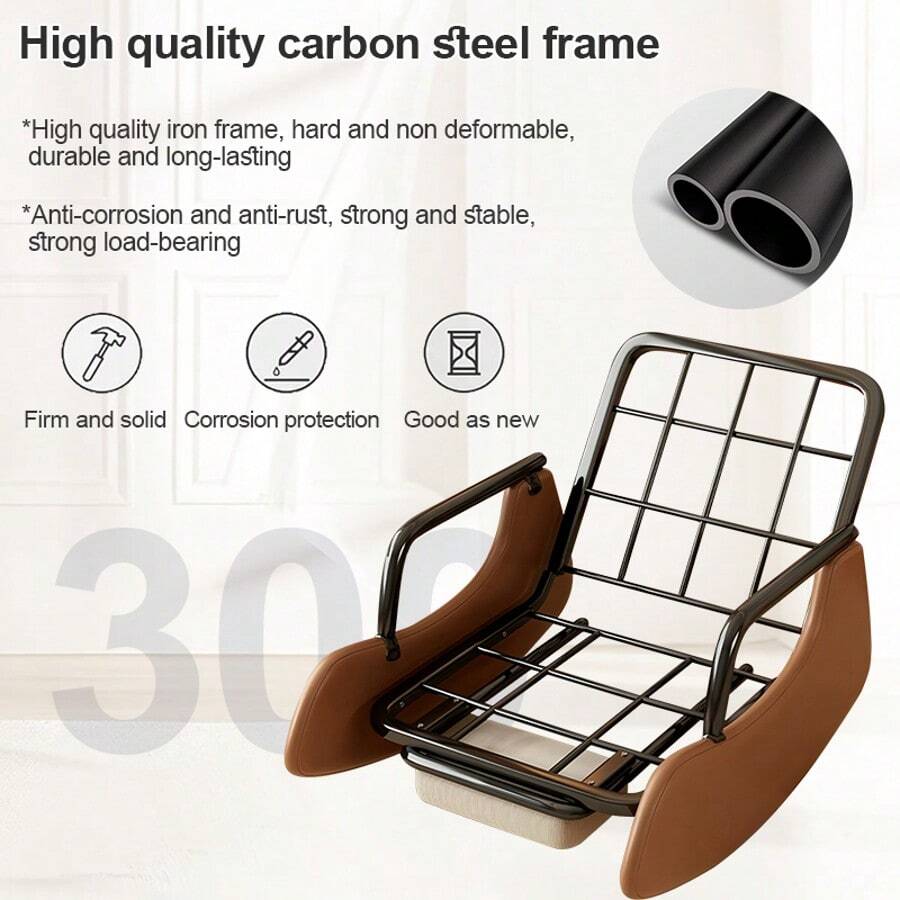
Frame: Steel and Solid Wood
Rocking Base: Curved Solid Wood
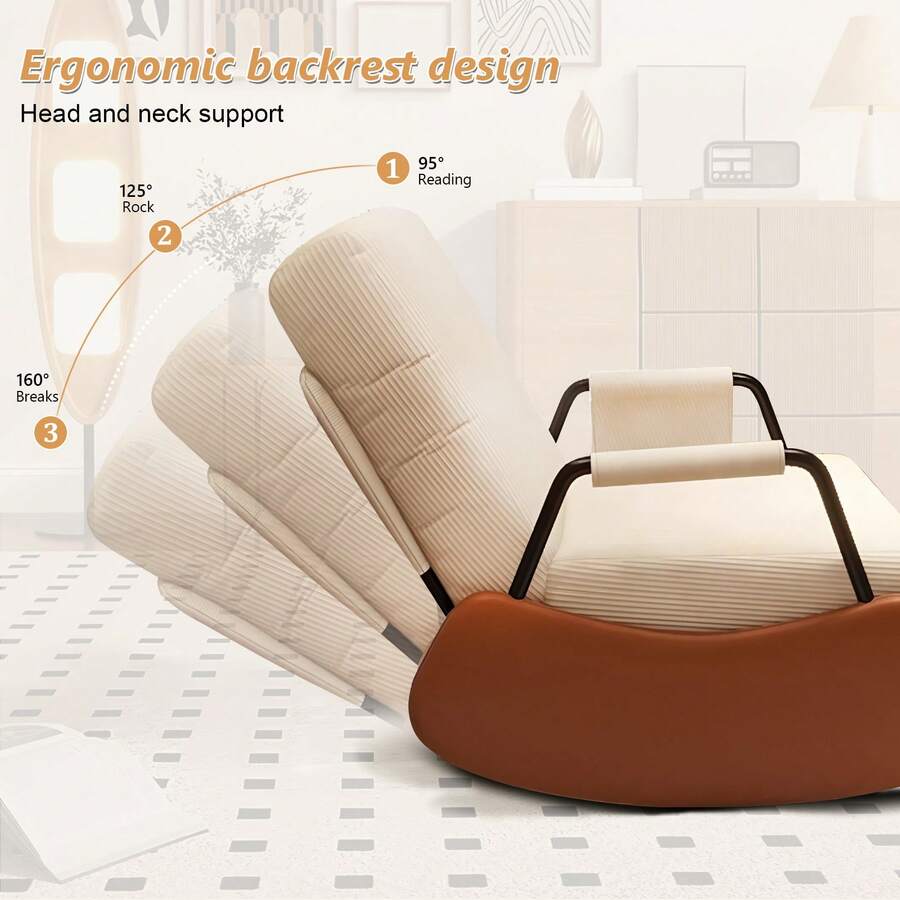
Reclining Positions: 3 Adjustable Positions
Retractable Footrest: Yes
Retractable Headrest: Yes
Removable Cover: Yes
Maximum Load Capacity: 150 kg
Assembly: Simple and Quick
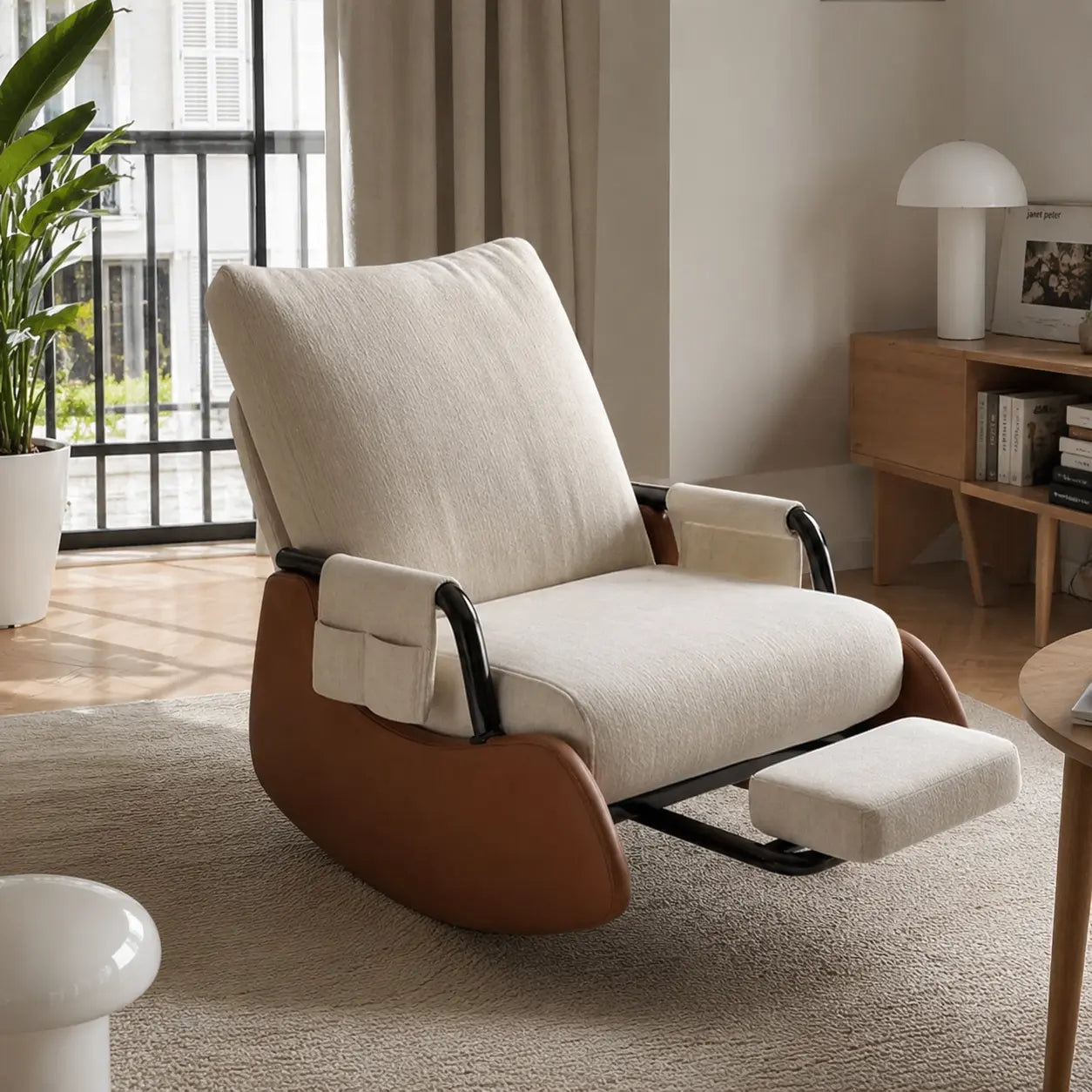
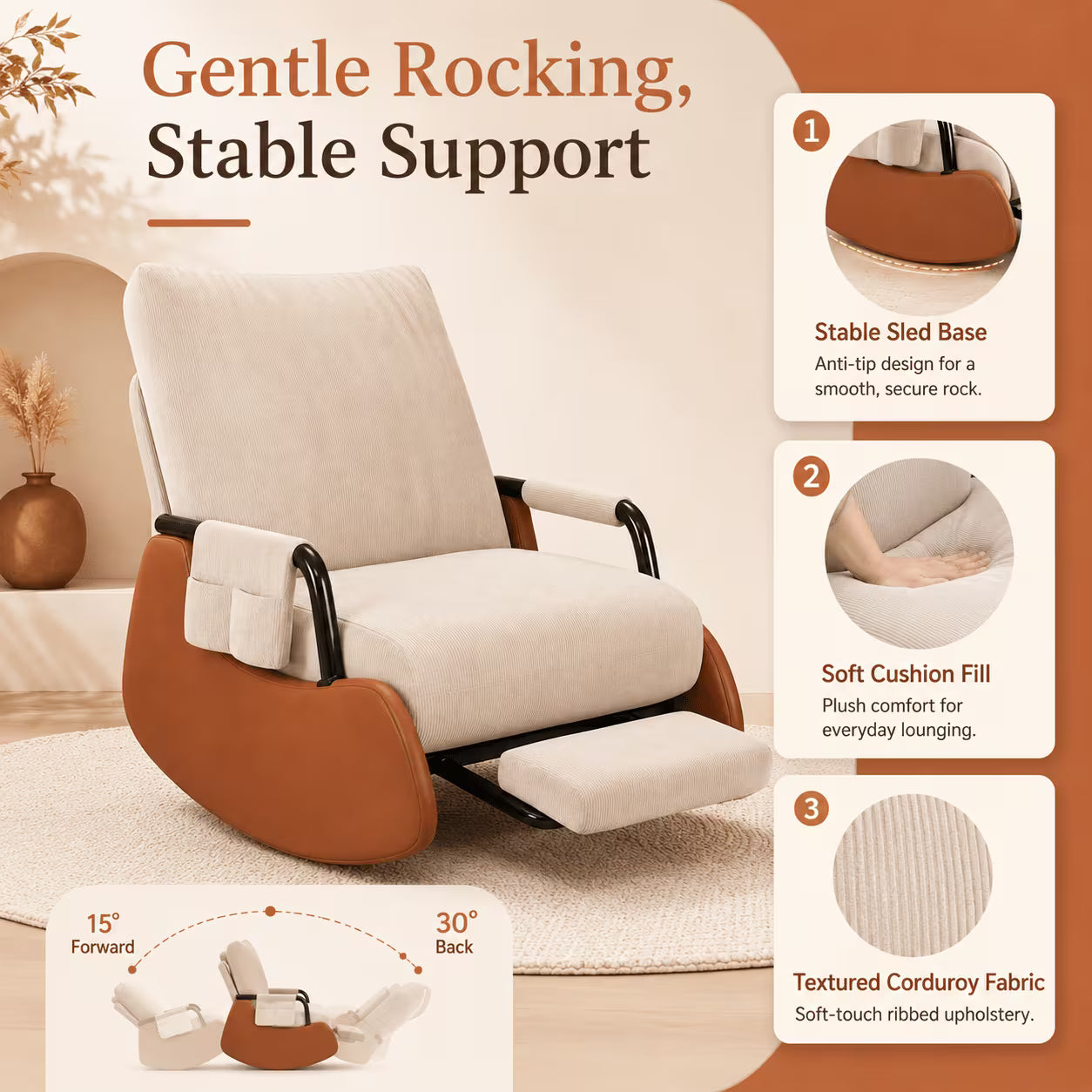
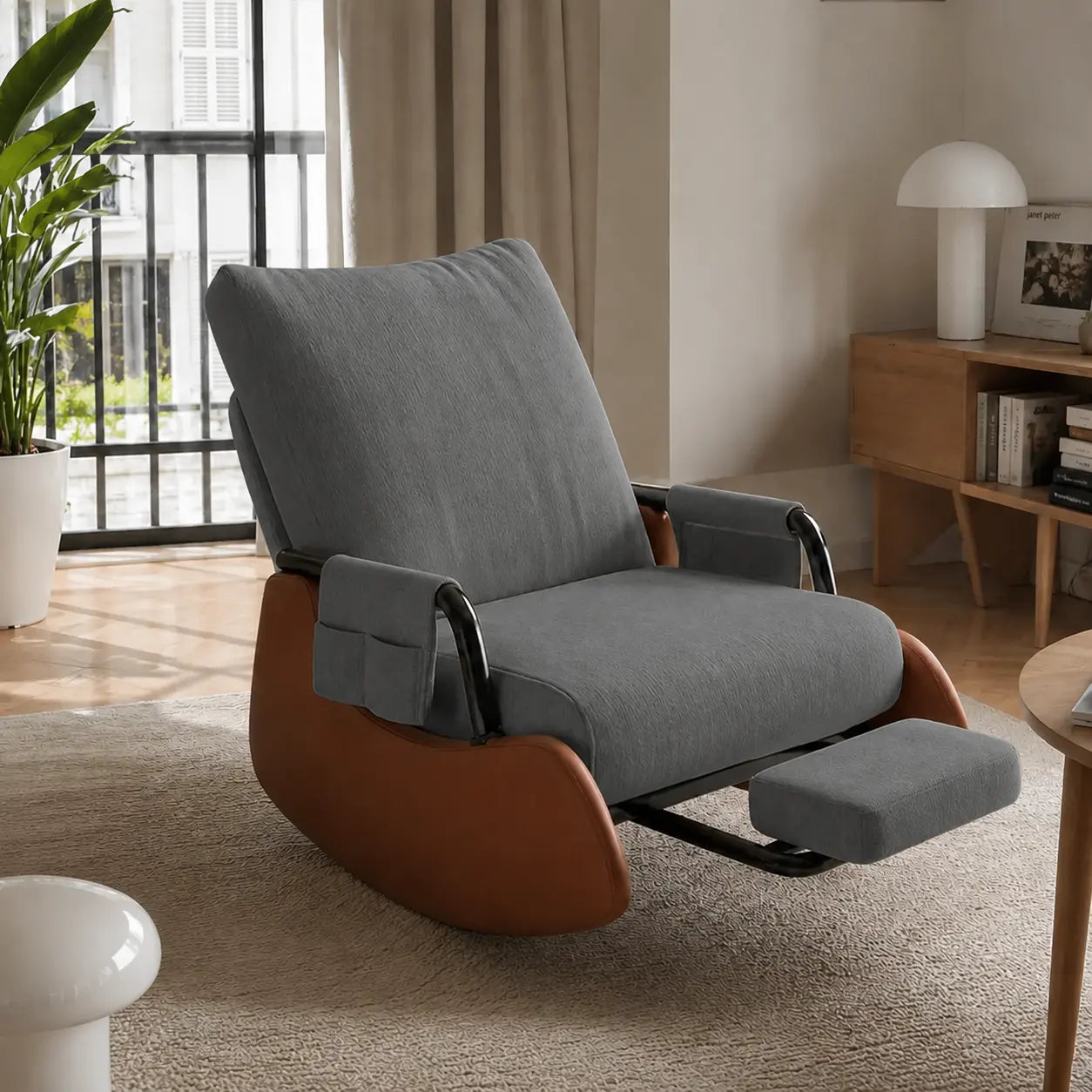
The sides are the first thing to read: two solid panels in tan, curved along the bottom edge so the whole chair rocks on them rather than on a pair of thin runners. Between them sits a loose cream cushion, squared and leaning back at a fixed angle. A black tube runs through each arm and drops into the panel below it. This rocking chair is built from three parts that stay visible.
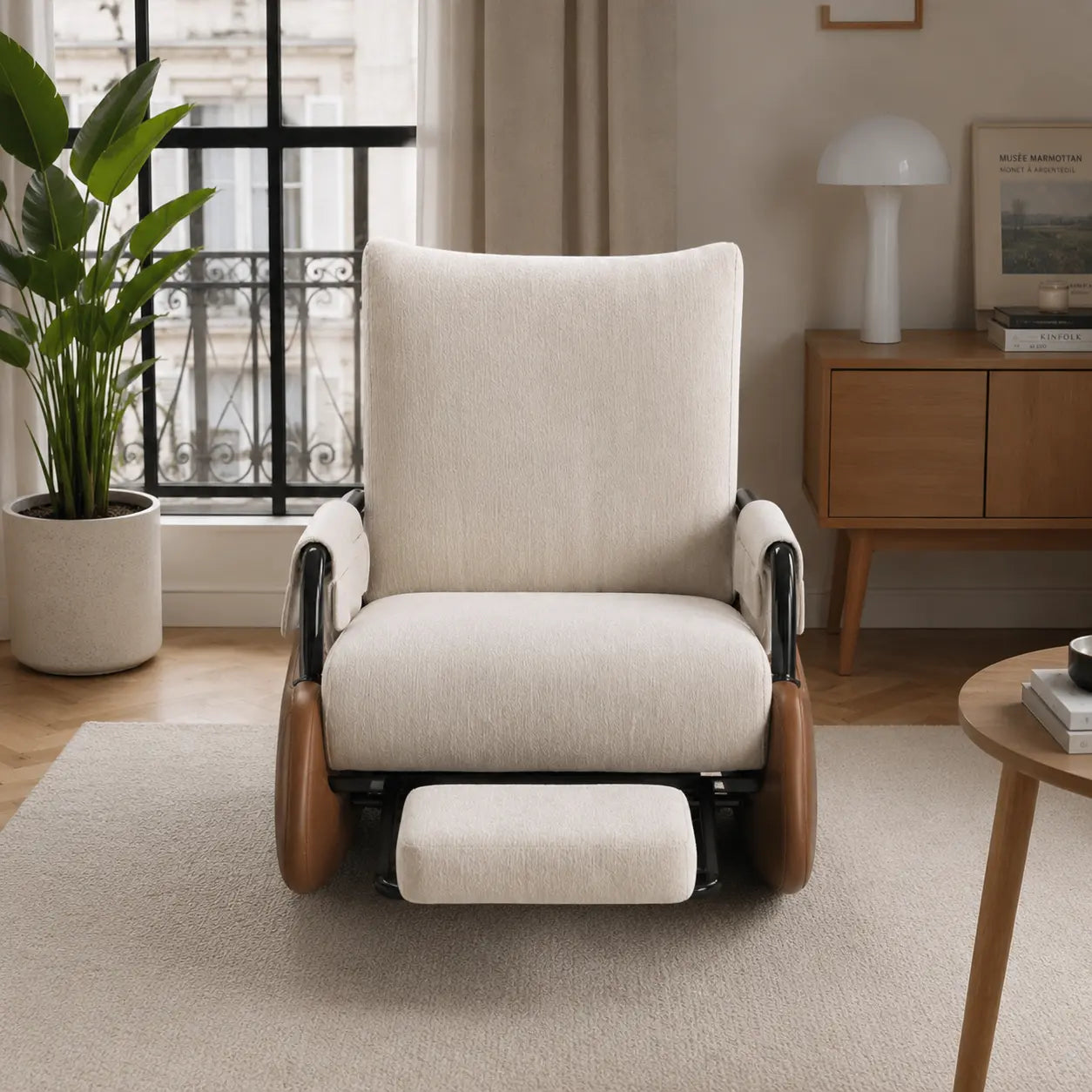
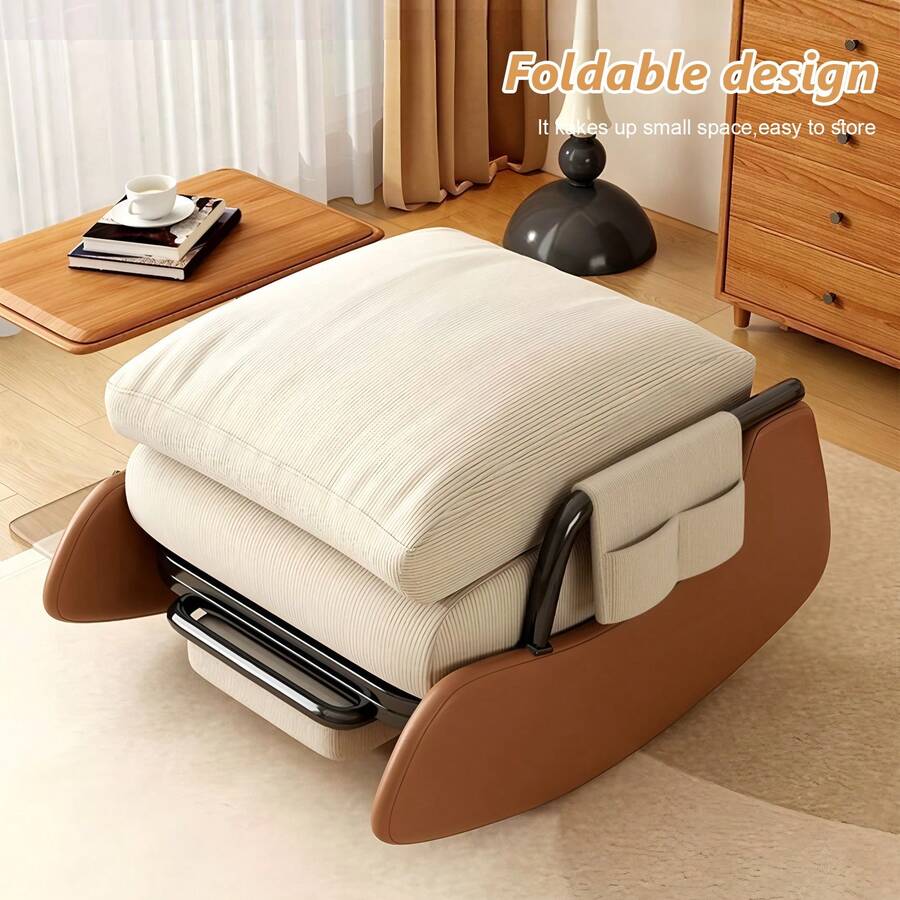
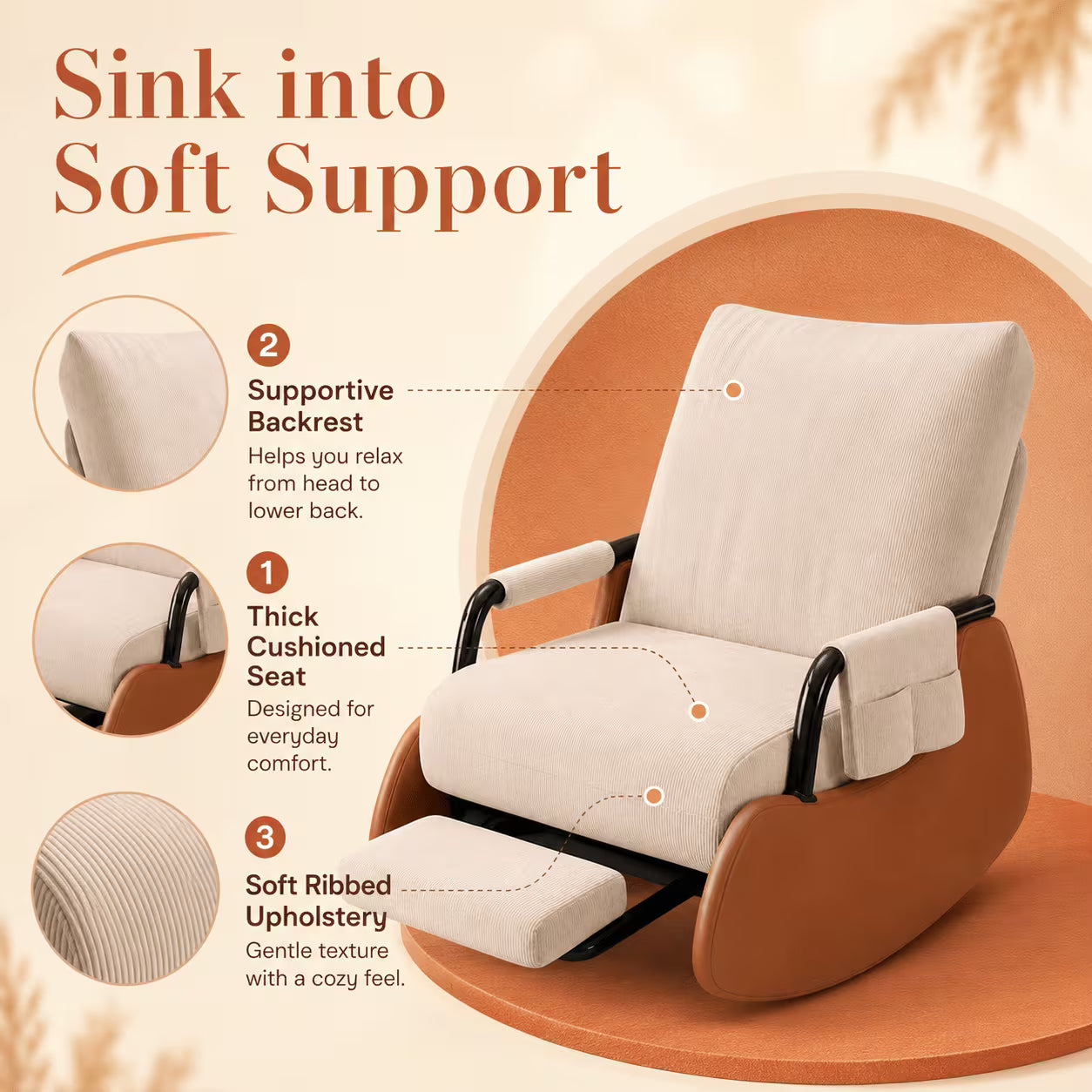
The seat cushion is deep and flat, and the back cushion sits behind it rather than on it, so the join reads as a gap. The arm pads are separate, wrapped over the tube and strapped in place, one carrying a small pocket. The metal takes the load, the panels take the movement, and the fabric carries neither. In daylight the weave shows a fine vertical grain.
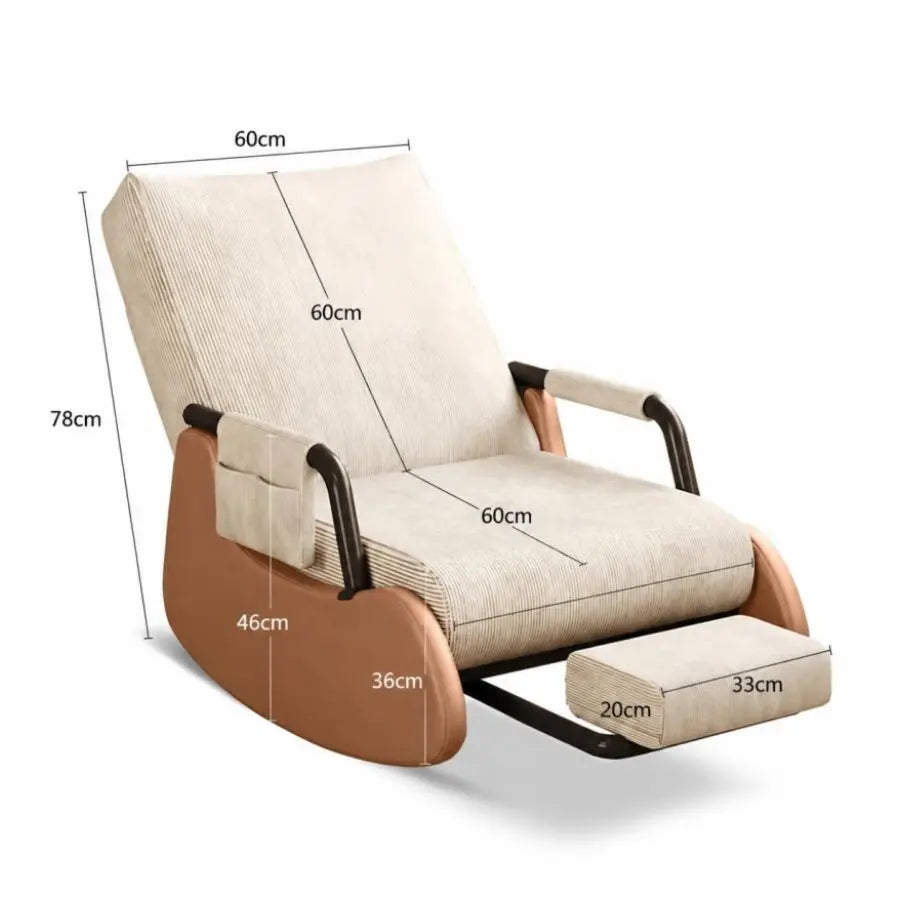
The footrest sits out at the front on a metal arm, which makes the chair longer than it looks in a photograph. The side panels run nearly the full depth of the seat, so the floor outline is closer to a small sofa than an armchair. Behind, the arc needs clear floor. In a room with a coffee table, the table moves before the chair does.
The pairing was settled before anything else: a cream weave against tan, with black between them. It is the tan that does the work. A warm mid-brown holds daylight without bouncing it back, so the panels stay solid while the cushions lift, and the chair keeps its shape at the far end of a room even when the light drops. Against oak flooring the two browns sit close without matching.
Cream on a seat that gets daily use shows two things: crushing where a body sits, and the darker line along the front edge where legs pass over it. Both answer to routine rather than repair. Vacuum the weave with a brush head, work along the grain, and lift spills with a barely damp cloth. The tan panels want a dry wipe and nothing else.
Structure separates one model from the next faster than fabric does, which is easier to see across the seats where the frame shows, among the models with a built-in footrest, and against every seat that rocks, where the motion is the only thing held in common.
Most upholstered rockers hide everything: the frame sits inside the cover, the runners are wood or steel underneath, and the shape is whatever the padding makes it. Here the structure is the shape. The tube is visible along the arm, the panels are visible from every angle, and the cushions sit on top as separate objects. Nothing is disguised as one continuous piece of furniture.
It works in rooms that already show their materials: timber floors, a metal lamp, a table with legs rather than a plinth. In a room of soft shapes it reads as the only hard object. What a fully upholstered rocker cannot give is a silhouette you can see through, and in a small room that gap under the seat is what stops the chair filling it.
Three materials, three jobs, and nothing hidden between them. The chair is legible from any angle, including from behind.
Three questions that have nothing to do with buying one.
Nobody can prove it. Benjamin Franklin is the name usually attached, on the strength of a claim made in a book from 1928, and the evidence for it is thin. What is documented is earlier: cradles set on curved bands, centuries before anyone thought to put an adult chair on them.
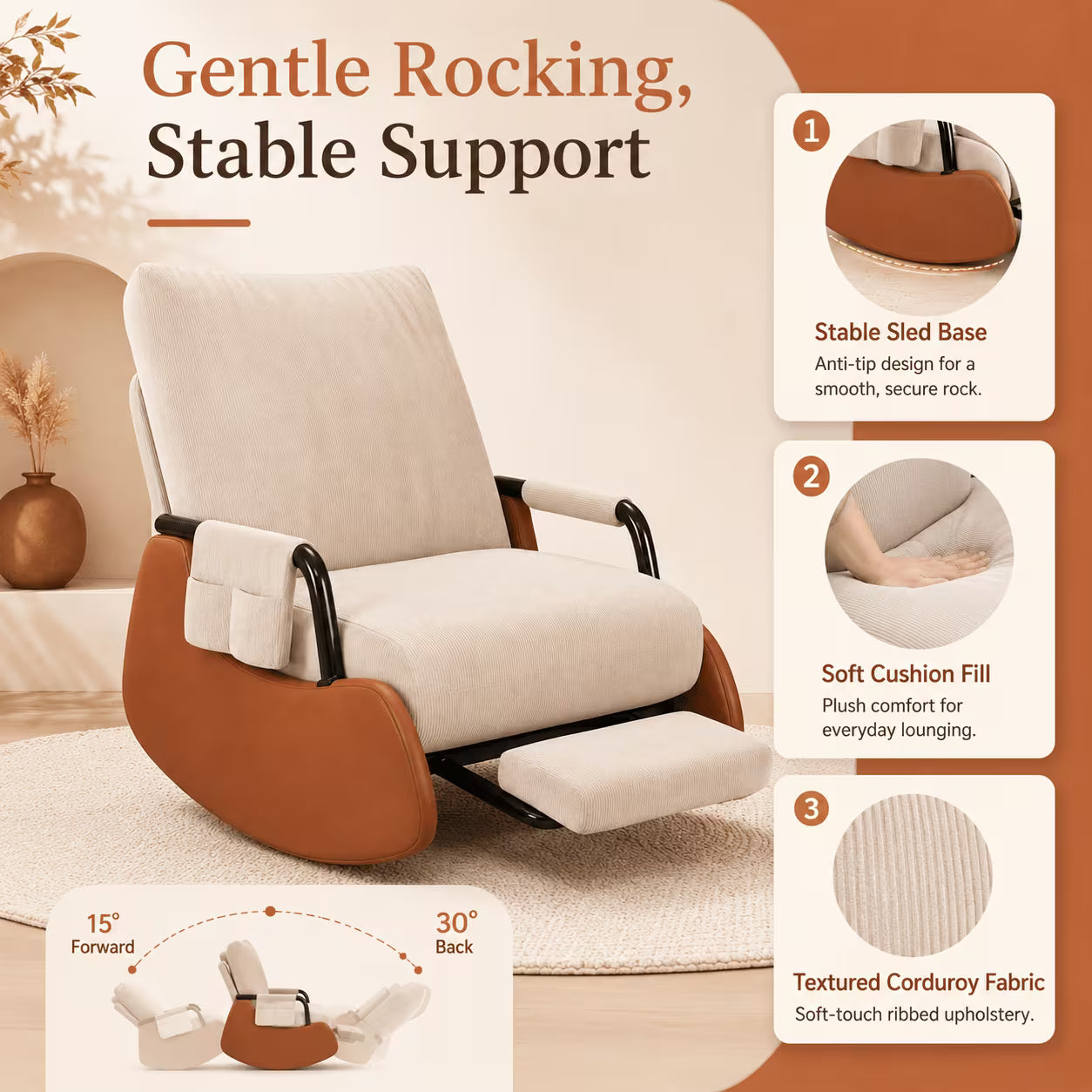
The curve decides how the chair behaves. A shallow curve gives a long, slow arc; a tighter one makes the movement quicker and shorter. Runner length matters as much: a longer runner spreads the load and stops the seat feeling like it might tip at the end of a stroke.
A nineteenth-century American type, and the one most people picture: a spindle back, a wide curved top rail, a seat that dips at the front and rises again at the back. They were usually painted dark and stencilled along the rail, and made in quantity rather than one at a time.

Your favorite place to unwind.
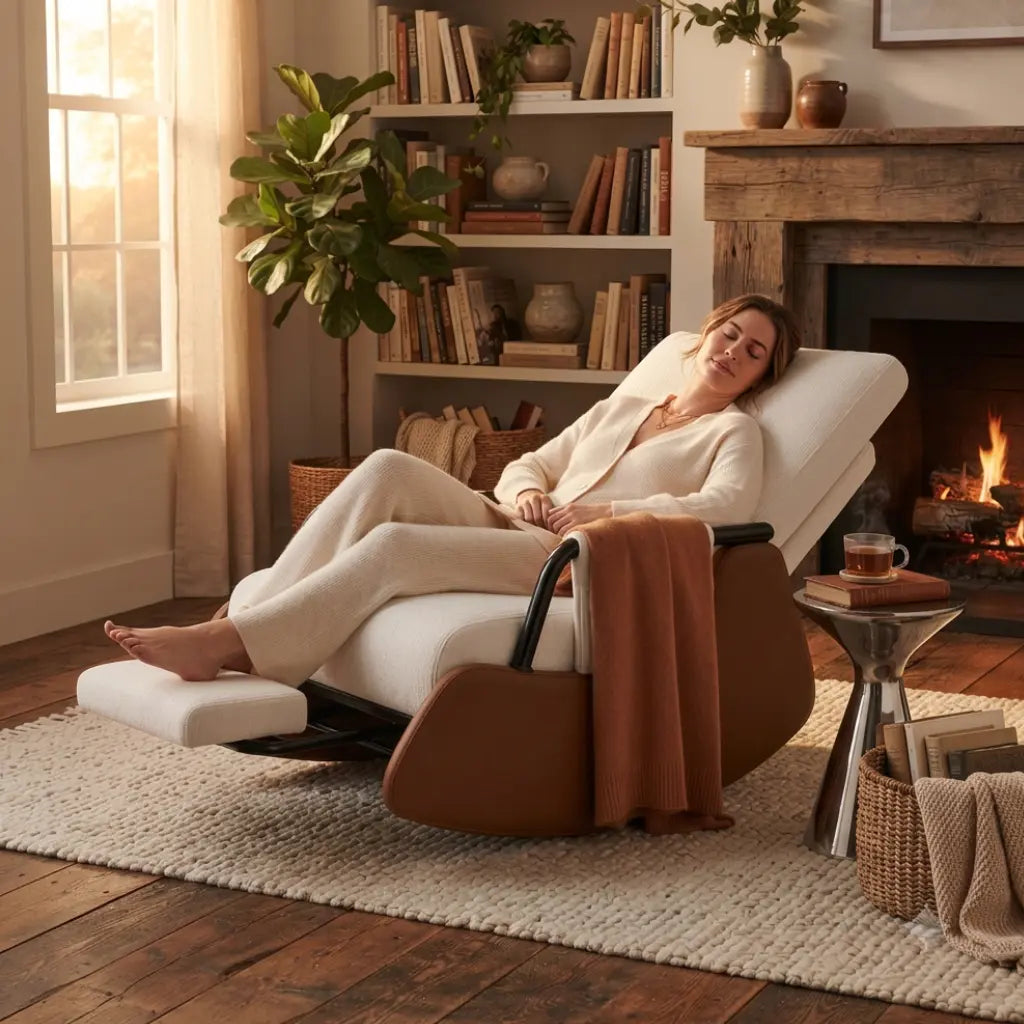
A calm corner of your home, made for slowing down at the end of the day.
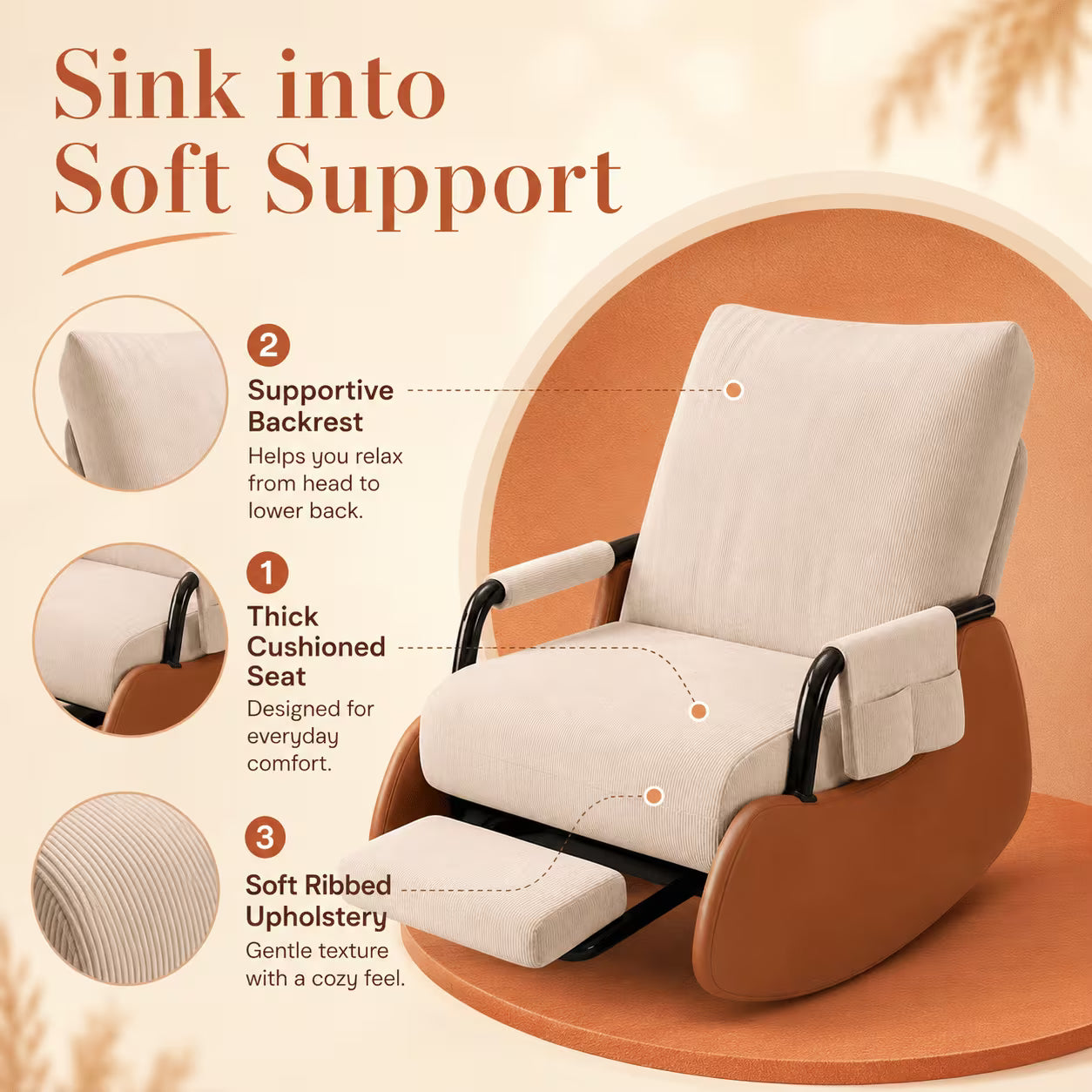
Sink into ultra-soft comfort.
Thick, enveloping padding that cradles you from the very first sit.
Built to last for years.
A solid frame and premium materials, made to age beautifully.
Designed to elevate your home.
A sculptural silhouette that anchors a room, as much a design piece as a place to sit.
Our expertise
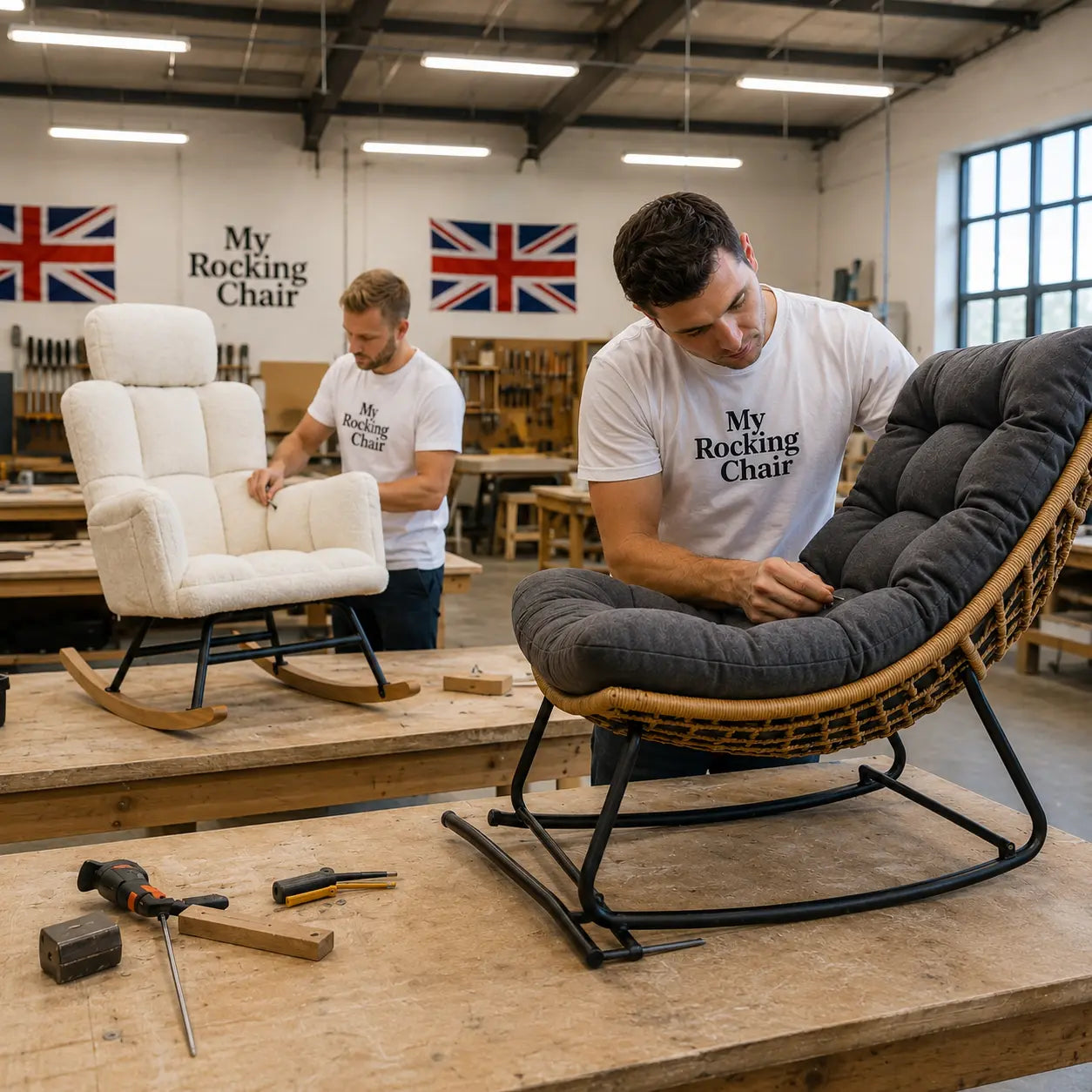
At My Rocking Chair, rocking chairs aren't just another product—they're our speciality. We craft every rocking chair with comfort, quality and timeless design at its core, helping you create a home that's made for relaxing, sharing moments and making memories. Because finding the perfect rocking chair should feel as effortless as sitting in one.
The details that make every day a little more comfortable.
All-day comfort
Thick, enveloping padding built for hours of easy relaxation.
Gentle, quiet rocking
A smooth, silent motion that helps you truly unwind.
Ergonomic support
Thoughtfully shaped to support your back, neck and arms.
Timeless design
An elegant silhouette that suits any interior, year after year.
Built to last
Solid frames and premium materials, made to age beautifully.
Quick assembly
Ready to rock in about 30 minutes, with no special tools.
No stress and no special tools. Follow the included guide and you will be ready to rock in about 30 minutes.
Unbox
Lay out the parts and the fittings included in the box.
Follow the guide
Clear, step-by-step instructions come with every chair.
Fix the base
Attach the frame and rockers with just a few screws.
Sit back
In around 30 minutes it is done. Time to relax.
Yes — it's a sumptuously soft, richly textured corduroy velvet set on a solid wood frame, not a thin printed fabric over particleboard. It's built to be the anchor piece of a room, the kind of chair that gets "where did you get that?" from guests.
With 3 recline positions (90°–160°), a built-in footrest and a smooth 15°–30° rocking motion, the Loeva is designed for settling in for hours — your quiet corner, not a chair you perch on.
You have 14 days to return or exchange it — no cross-questioning, no hassle.
The Loeva sits on a solid wood frame, built as a long-term piece of furniture rather than a one-season purchase — the kind you could still be rocking in five years from now.
Its organic silhouette is designed to feel more expensive than it is — a sculptural, statement shape rather than a generic armchair, so it slots straight into a considered, Pinterest-worthy room.
Not at all. Everything you need is in the box, with a clear step-by-step guide to follow — most people have it fully assembled in around 30 minutes.


