

The rocking is really smooth
No juddering and no noise. It is genuinely relaxing rather than fidgety.

Rosie A.


 In Stock - Free UK Shipping
Five positions and I use all of them
Upright for the telly, halfway for reading, flat out for a Sunday nap. The lever is easy to reach without having to get up.
 Verity S.Bought: Beige
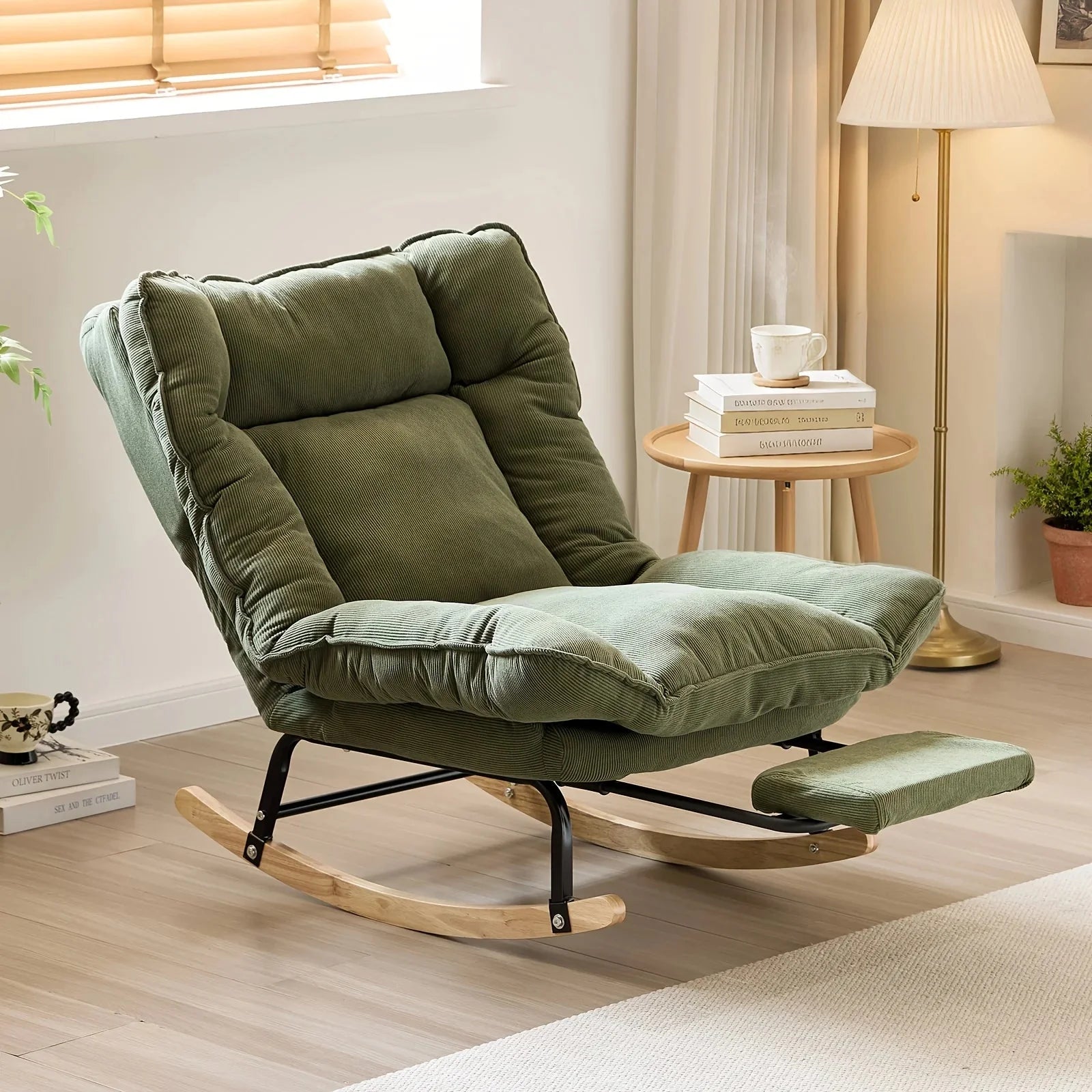
Khaki is a beautiful shade
Muted and earthy rather than army green. It has lifted the whole living room.
 Louise D.Bought: Khaki
Fell asleep in it on day one
That is the highest praise I can give an armchair.
 Nadia H.Bought: Light Blue
Assembled in 20 minutes
Clear instructions, tools included, nothing missing from the box.
 Marcus P.Bought: Khaki
The rocking is really smooth
No juddering and no noise. It is genuinely relaxing rather than fidgety.
 Rosie A.Bought: Beige
Better than I hoped
Ordered on a whim after seeing it online and I am genuinely delighted with it.
 Gemma O.Bought: Beige
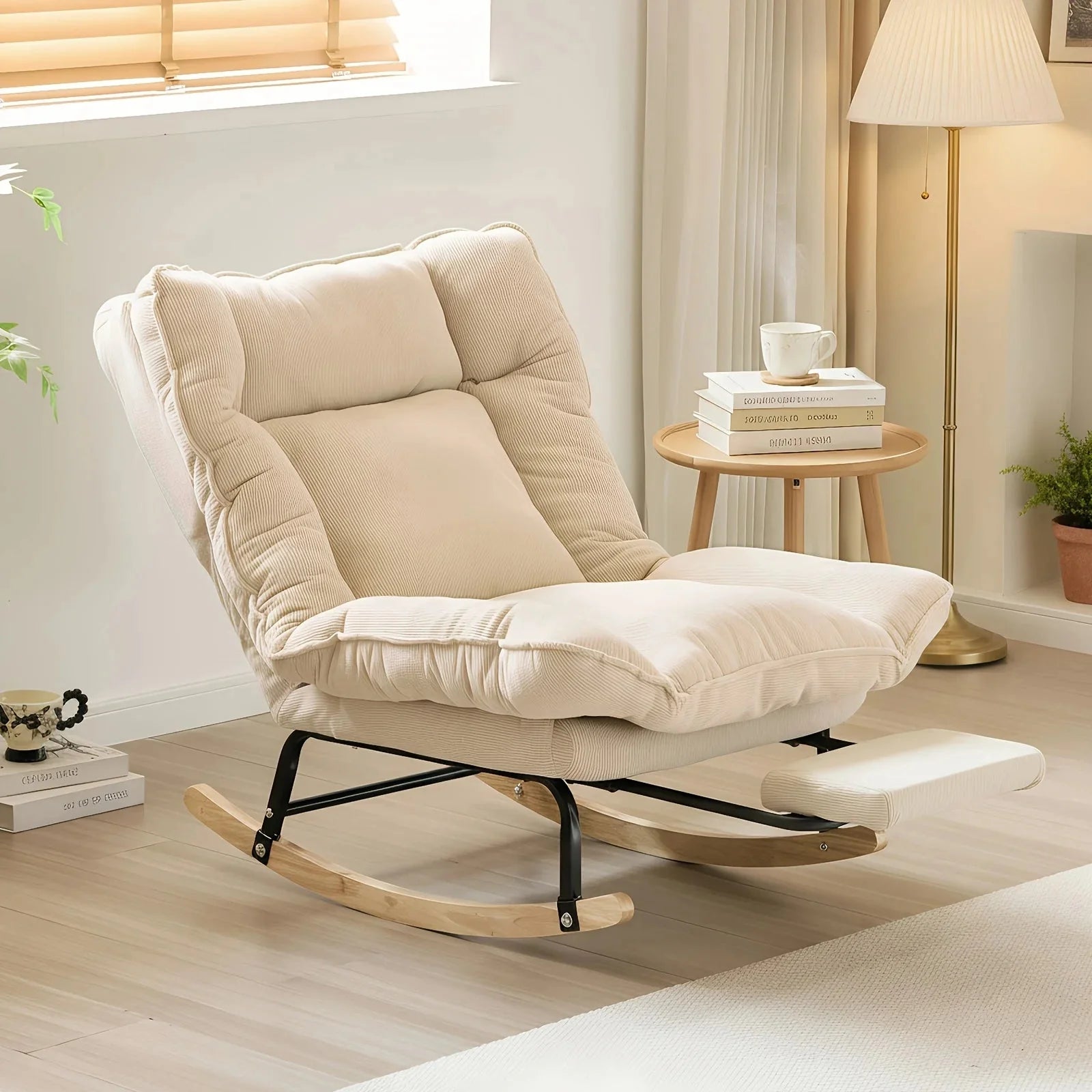
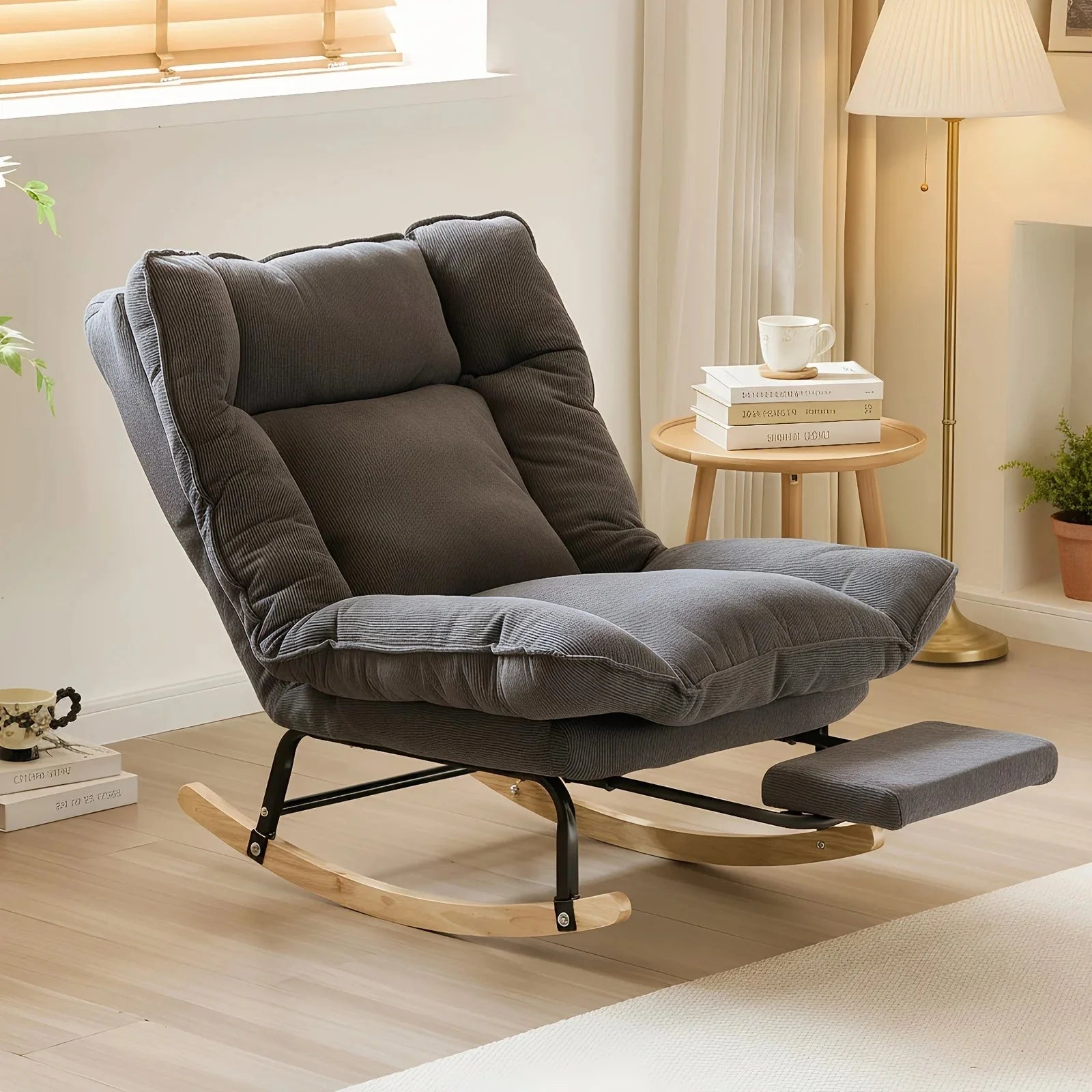
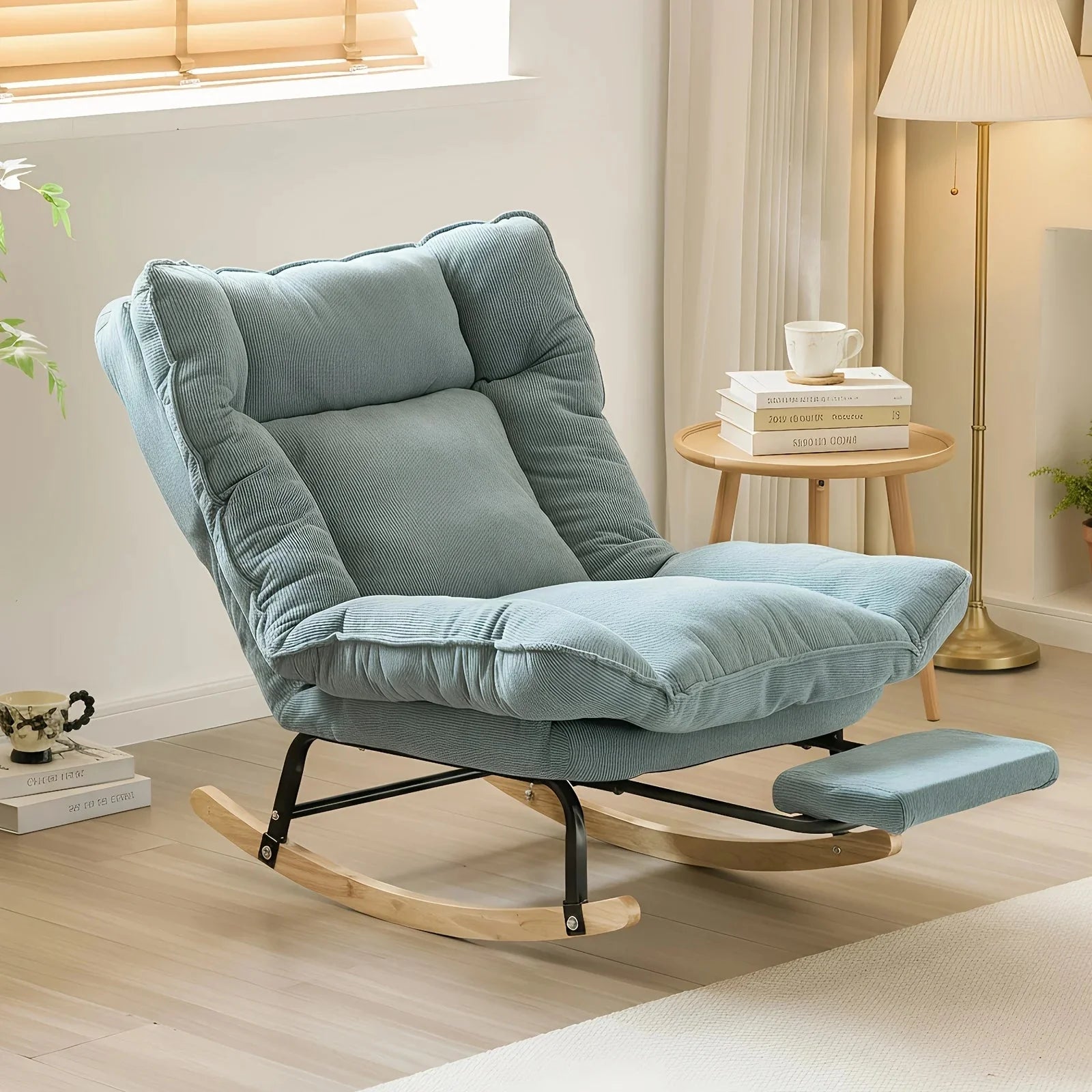
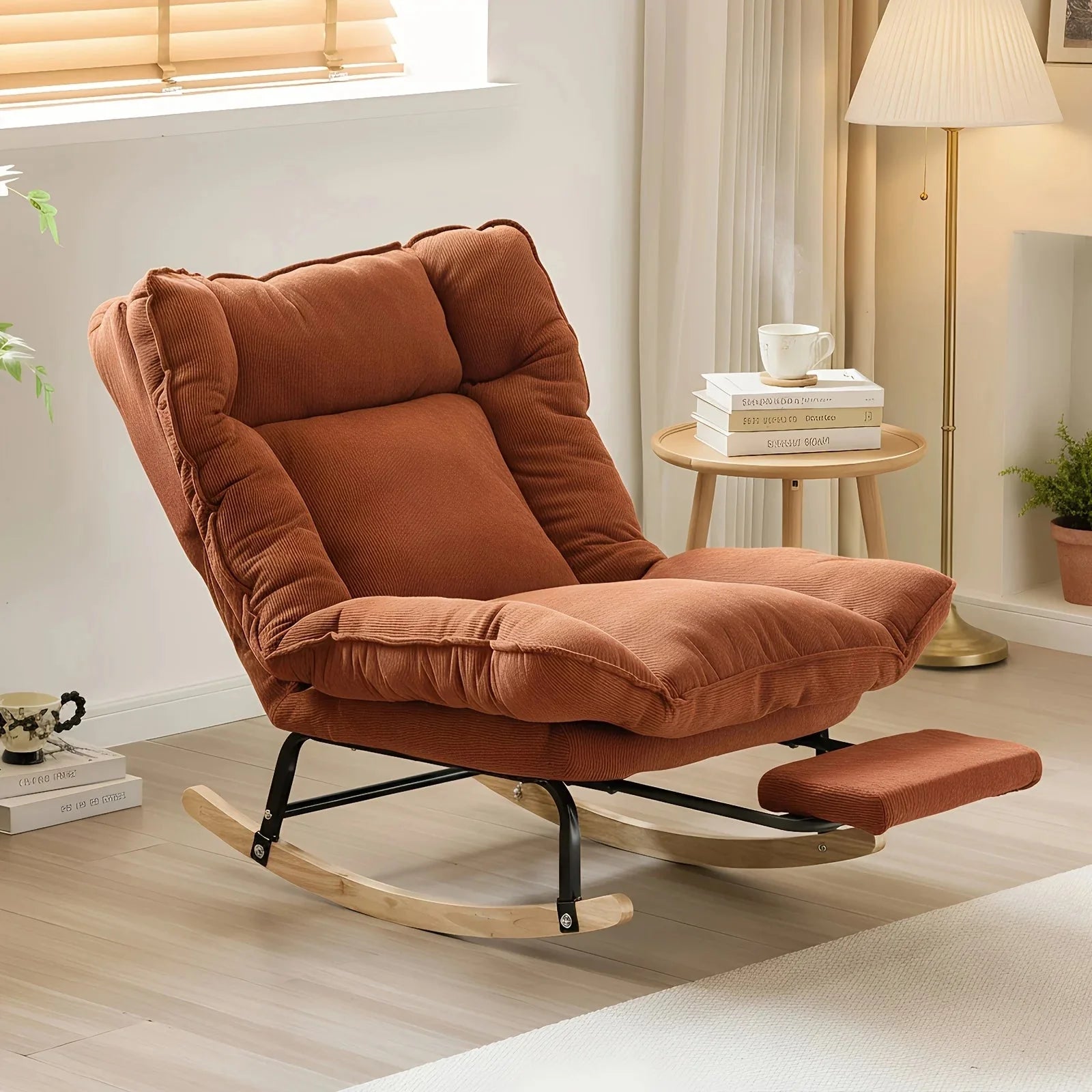
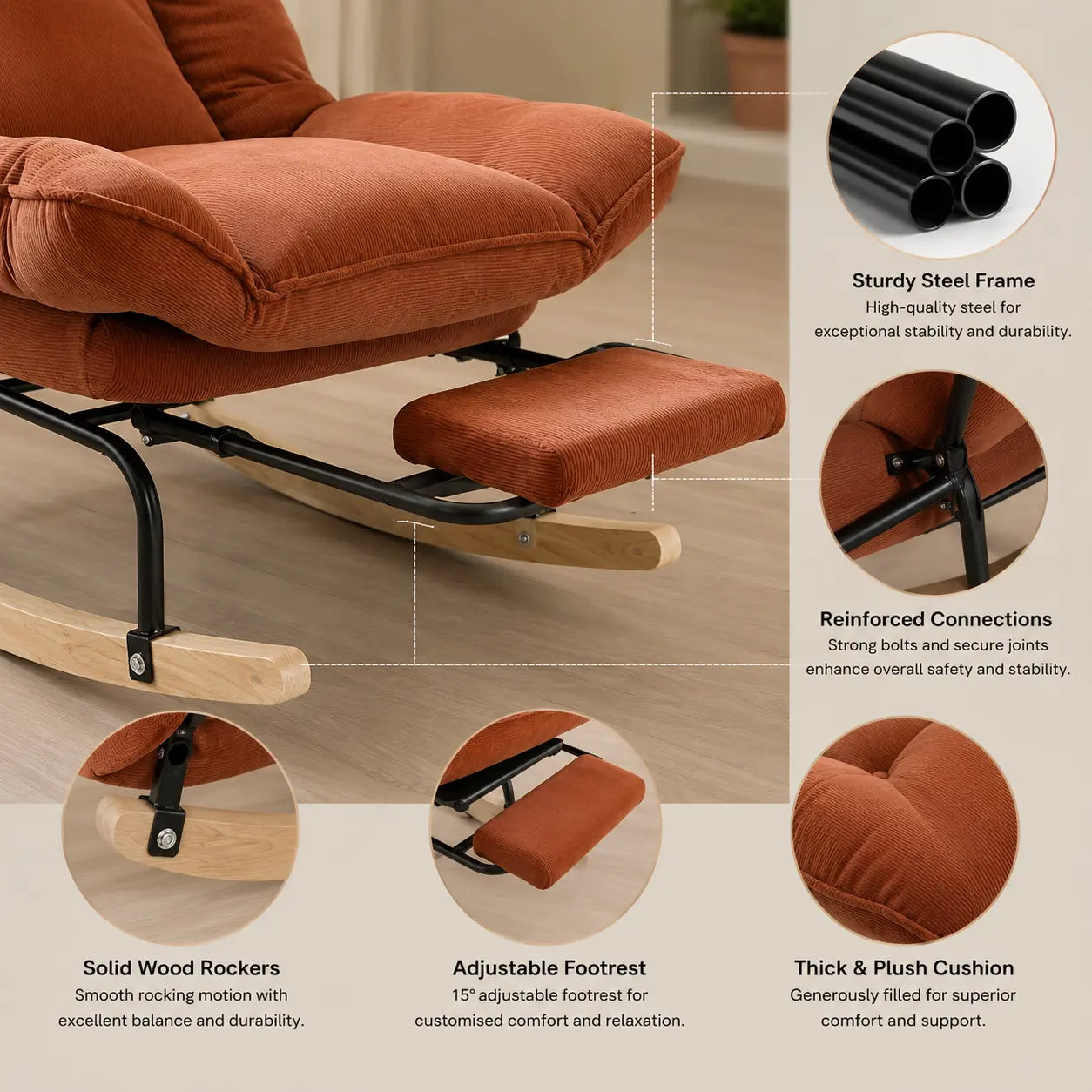
The ribs run vertically up the back, close together, and catch the light in fine parallel lines. Everything they cover is thick: a padded headrest at the top, then a back that swells forward at shoulder height, then a seat cushion deep enough to sit above the frame line. Under all of it, a rocking chair in black steel and pale wood.
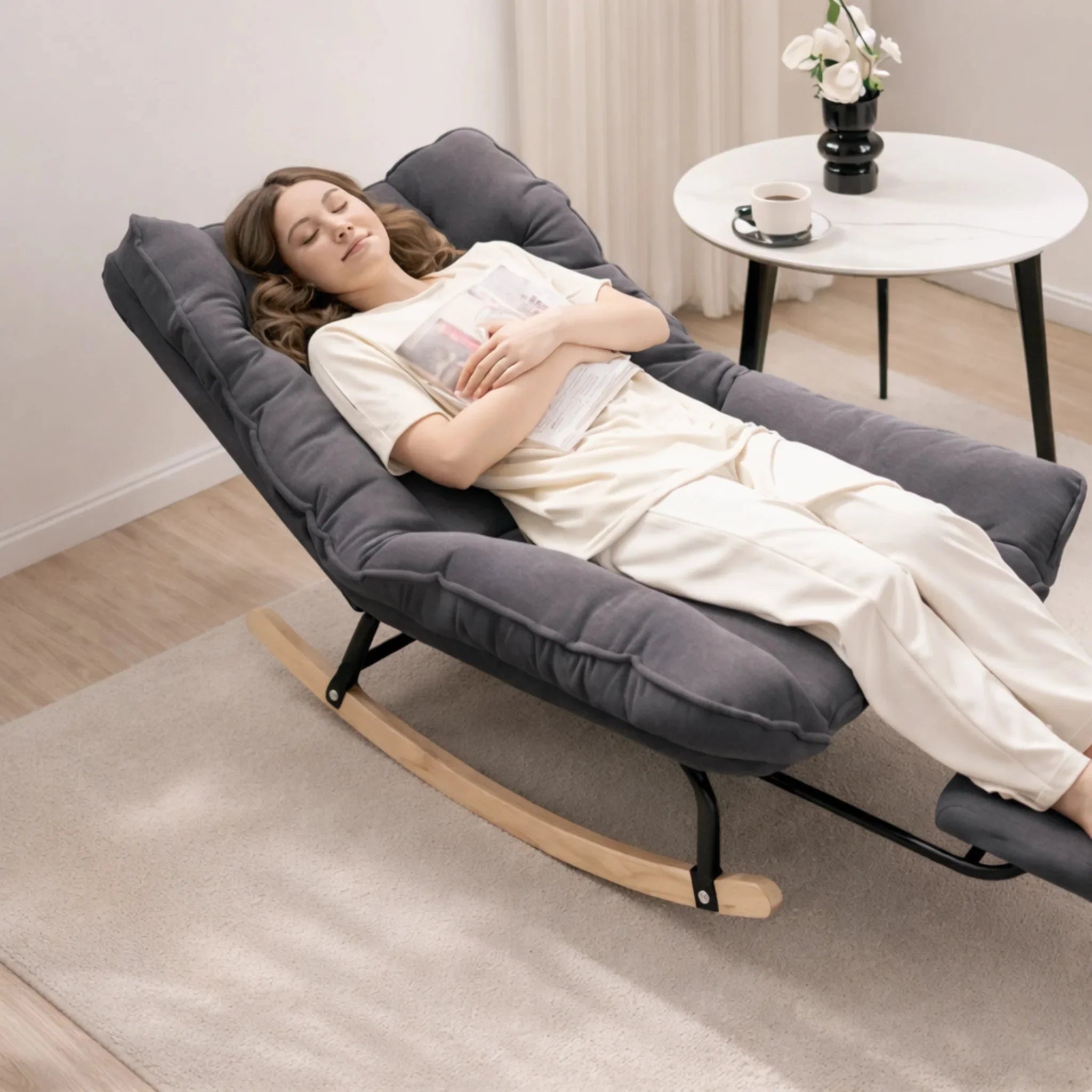
Weight does the work. Push back into the upholstery and the frame follows, running from upright to flat through 90 to 180 degrees, while the footrest slides out at the front. The wooden runners keep rocking underneath the whole time, so the movement carries on after the angle has changed. The steel legs stay where they are; only the shell above them moves.
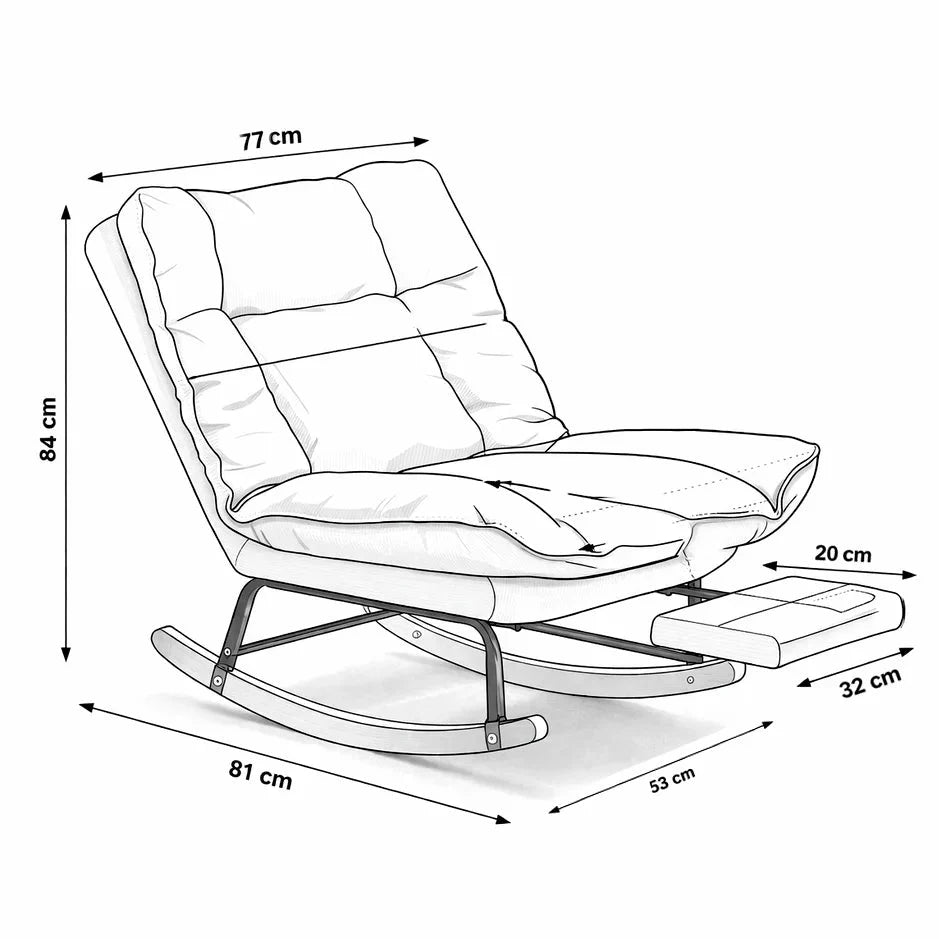
Flat is where the measuring starts. At full recline the back needs clear space behind it, and the footrest adds its own length at the other end, so the floor it occupies grows at both ends at once. The runners still need travel for the arc on top of that. Against a wall, the useful angle is whatever the gap allows, not what the mechanism allows.
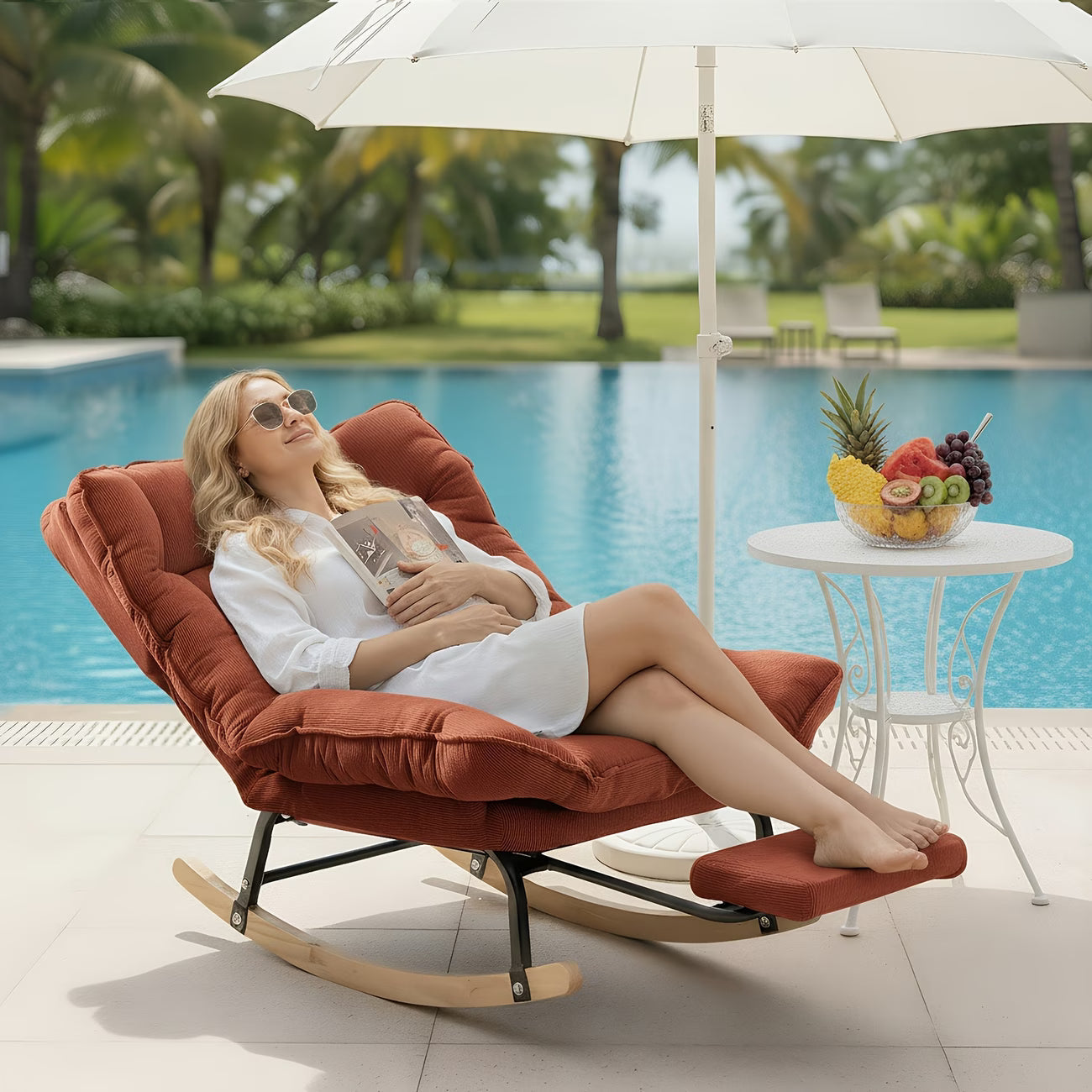
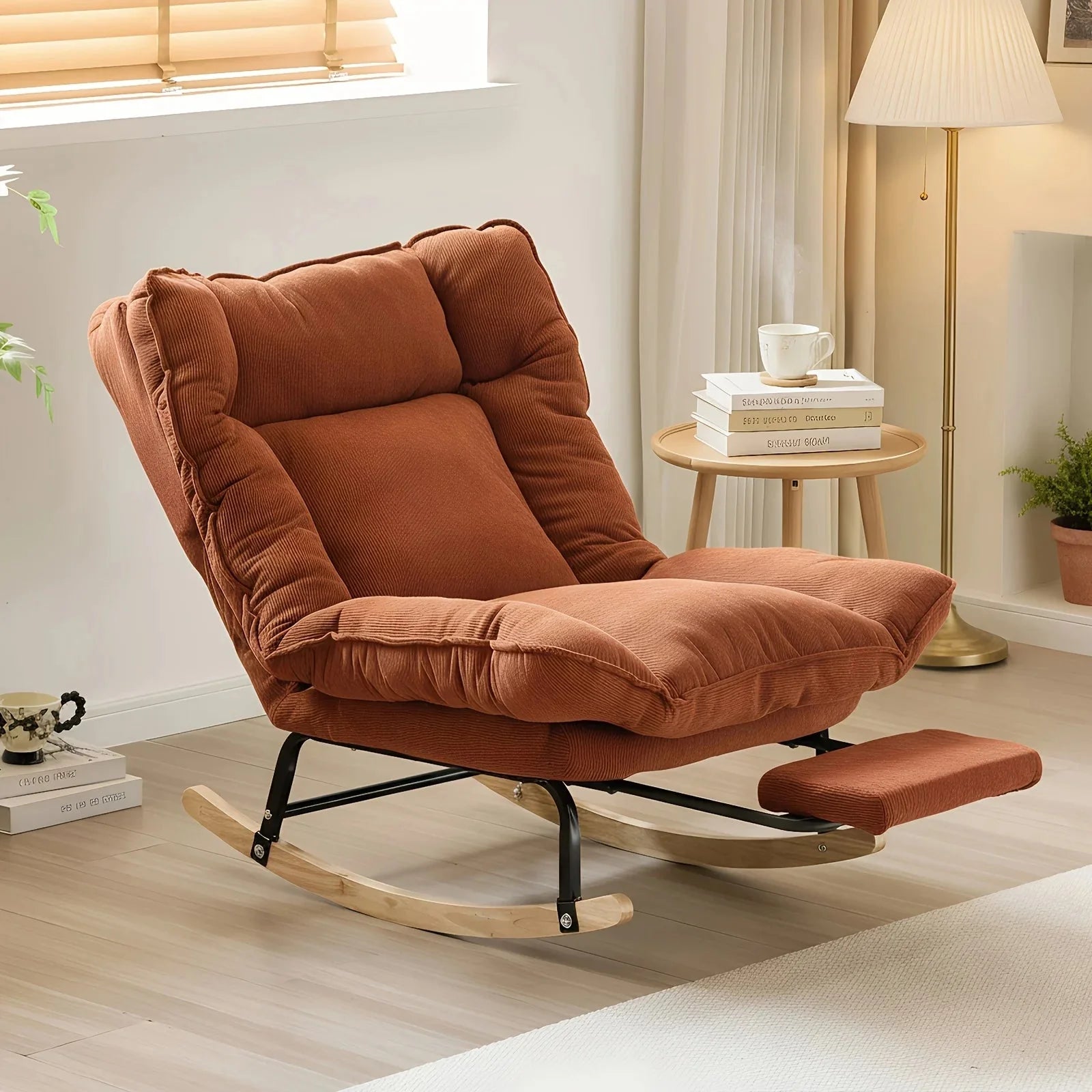
The drawing does most of the work here: black legs set against pale wood, ribs reading as vertical rules, a back cut in one continuous line. Colour decides how visible that drawing stays. In beige or light blue the ribs show as light and shade, and the outline holds at a distance. Khaki and dark grey keep the light inside the pile, so the ribbing softens. Terracotta does the opposite, pulling the eye to the texture before the frame.
Corduroy has a direction. Vacuum along the ribs rather than across them so the pile is not crushed; brush the same way to lift it again. Blot spills with a barely damp cloth and mild soap, since too much water flattens the cords. The removable cushion helps here: it can be taken out and worked on flat instead of leaning into the frame.
Mechanisms separate more clearly than styles do. The seats with a matching footstool reach the same position without a moving frame, the models with a sculpted outline put the line first, the seats built for terraces carry a covering specified for that use, and the chairs that rock without reclining keep the motion on its own.
Most rocker recliners stop at fixed positions: a lever releases the back, the footrest jumps out, and the angle lands where the mechanism decides. Here the range is adjustable rather than stepped, so the back can be left part way and the footrest travels with it. The frame is solid wood and steel, rated to 150 kg, and the runners underneath are one continuous curve with nothing to lock them.
It suits rooms where a chair can stand away from the wall: a corner with a gap behind it, the end of a lounge, a window bay deep enough to take the recline. A reclining rocker asks for that gap permanently. What a fixed rocker cannot do is hold a position between sitting and lying, or take the legs off the floor without a separate stool.
The mechanism is the whole argument here. Whether it holds depends on the floor behind the chair. That gap is the first measurement.
Three questions that come up when this kind of seat is being considered.
A chair whose angle is changed by the person sitting in it, rather than by a motor. Pushing back against the frame, or pulling a side lever, releases the backrest and raises the leg rest. Nothing is plugged in, and there is no handset, so the range is set by the body's own weight.
The path each one takes. A rocker travels on a curve, tipping through an arc on runners or a sprung base, so the seat rises slightly at each end of the movement. A glider runs on a linkage that keeps the seat level and moves it straight back and forth. Both can be built to recline.
A cut-pile cloth with raised cords running in one direction, known as wales. The pile is cut open along each cord, which is why the surface catches light one way and looks darker the other. Wale count sets the look: wide cords read as heavy ribbing, narrow ones as a fine, even texture.
Type: Reclining Rocking Chair
Upholstery: Corduroy Fabric
Padding: High-Density Foam
Frame: Solid Wood and Steel
Rocking Base: Curved Solid Wood
Reclining Positions: Adjustable, 90-180°
Retractable Footrest: Yes
Removable Cushion: Yes
Maximum Load Capacity: 150 kg
Assembly: Simple and Quick
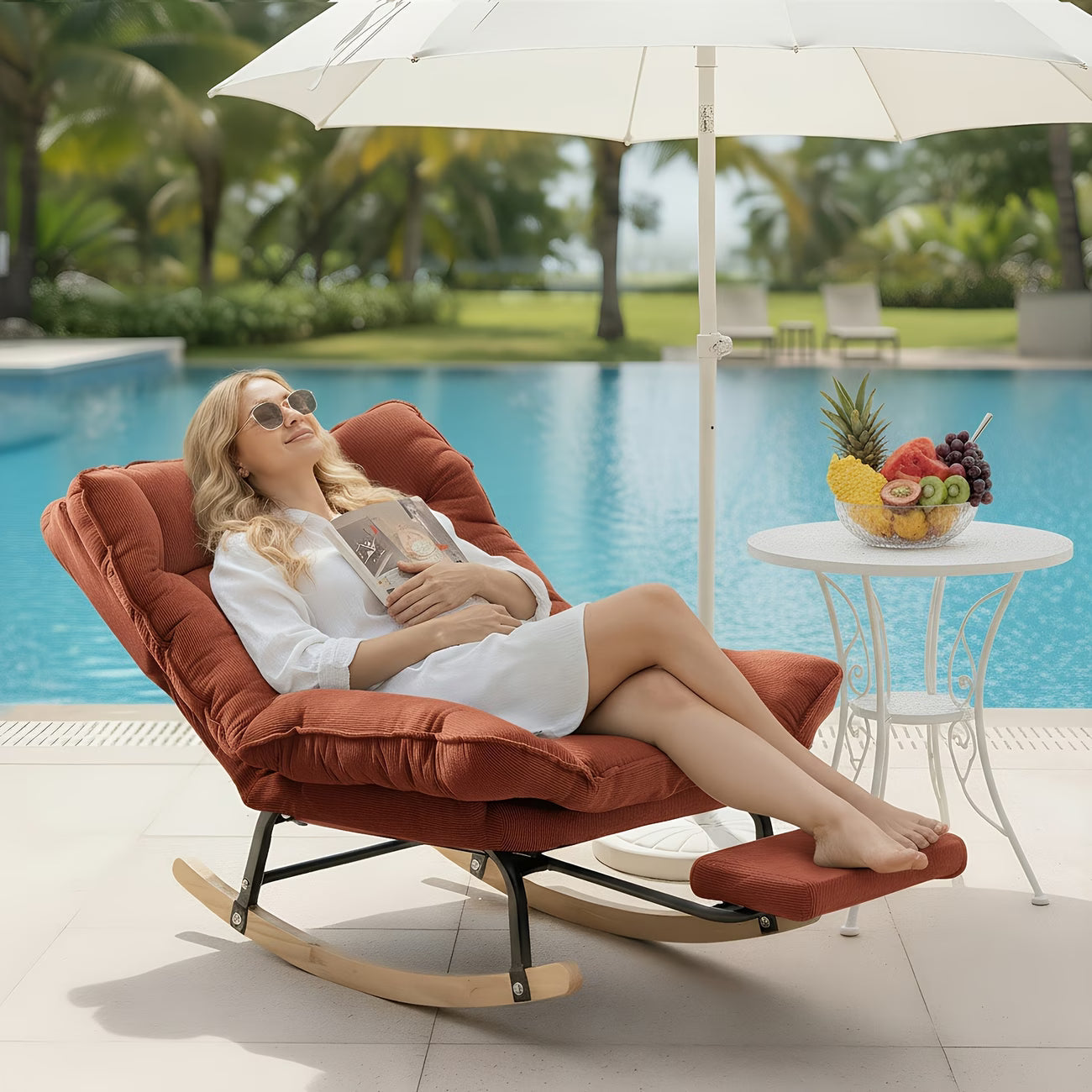
Your perfect place to unwind
One chair that follows you through the whole evening.
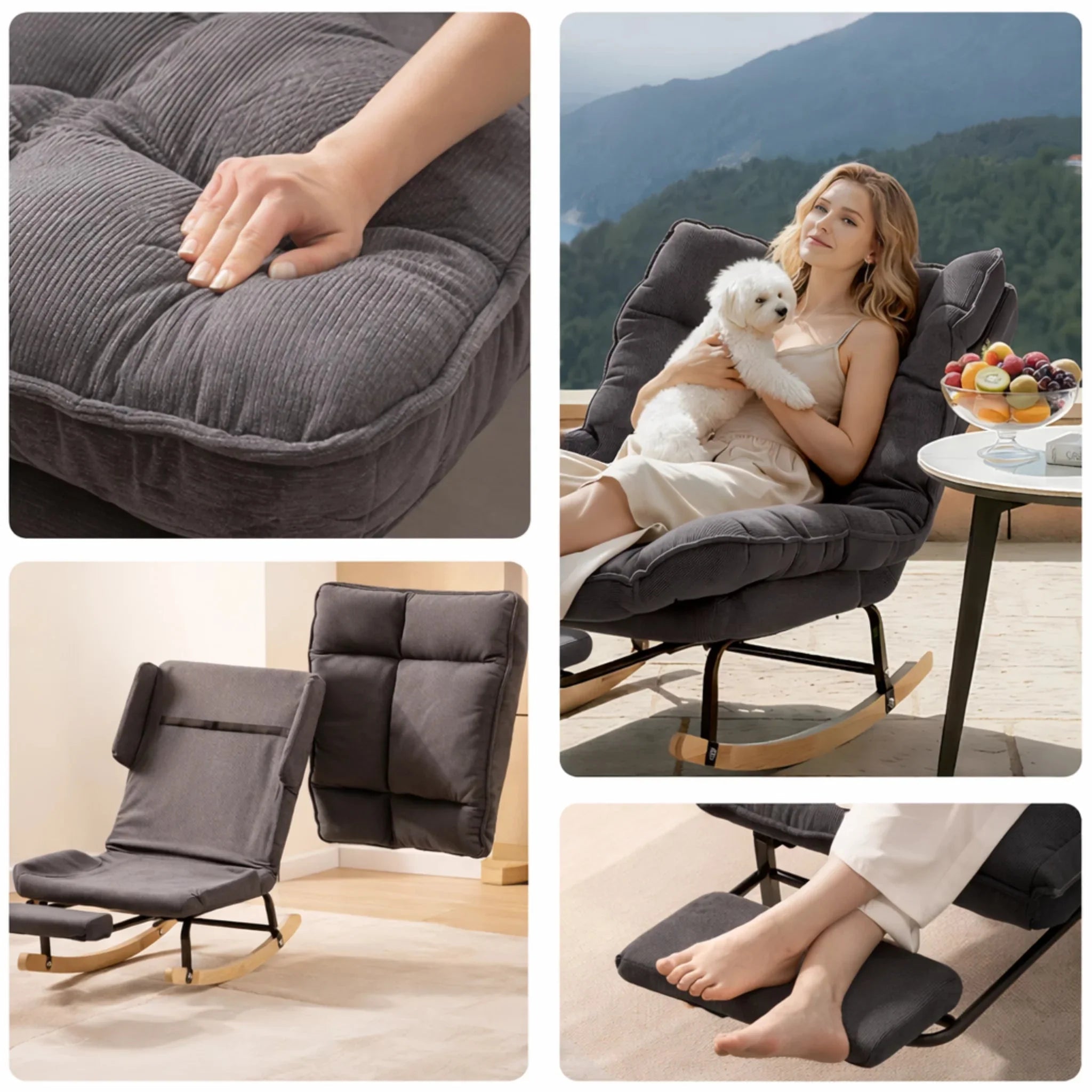
Sink into ultra-soft comfort.
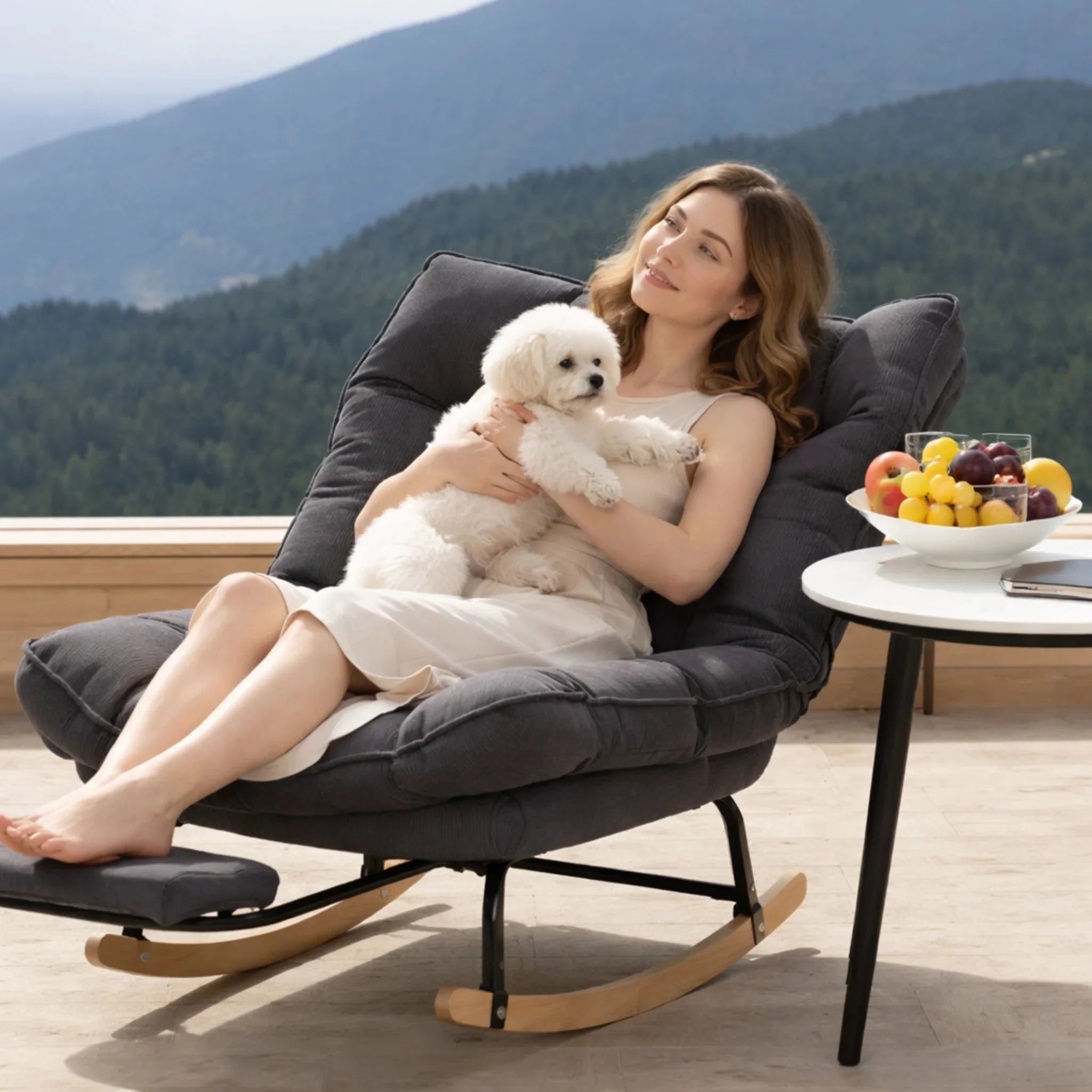
Lounge, bedroom, balcony or garden — it reclines exactly the same way in all of them. Drag the slider to see it in both settings.

Outdoor
Indoor
Built to last for years.
The details that make every day a little more comfortable.
All-day comfort
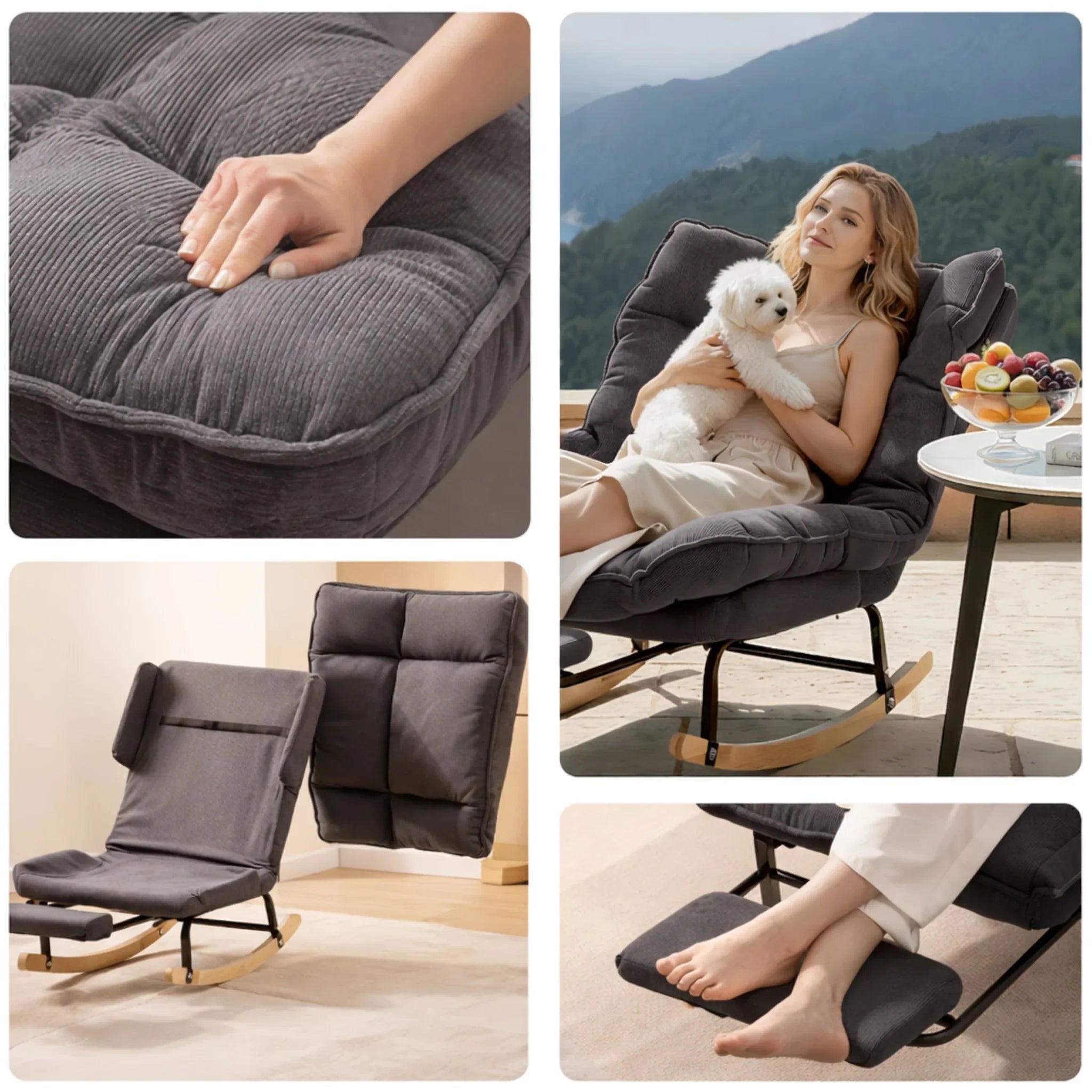
Thick, enveloping padding built for hours of easy relaxation.
Gentle, quiet rocking
A smooth, silent motion that helps you truly unwind.
Ergonomic support
Thoughtfully shaped to support your back, neck and arms.
Timeless design
An elegant silhouette that suits any interior, year after year.
Built to last
Solid frames and premium materials, made to age beautifully.
Quick assembly
Ready to rock in about 30 minutes, with no special tools.
No stress and no special tools. Follow the included guide and you will be ready to rock in about 30 minutes.
Unbox
Lay out the parts and the fittings included in the box.
Follow the guide
Clear, step-by-step instructions come with every chair.
Fix the base
Attach the frame and rockers with just a few screws.
Sit back
In around 30 minutes it is done. Time to relax.
It's a thickened, plush corduroy chosen for an instant, enveloping softness — not a thin fabric stretched over foam.
The backrest adjusts continuously from 90° to 180°, with an integrated dual-sided footrest — built for a full recline, not just a slight lean-back.
You have 14 days to return it for a full refund — it's designed to move between lounge, bedroom, balcony or garden, so there's flexibility if your first spot doesn't work.
The natural wood and metal frame is built for stability through every gentle sway and full recline, not just gentle rocking.
Not at all. Everything you need is in the box, with a clear step-by-step guide to follow — most people have it fully assembled in around 30 minutes.
Five positions and I use all of them
Upright for the telly, halfway for reading, flat out for a Sunday nap. The lever is easy to reach without having to get up.
Khaki is a beautiful shade
Muted and earthy rather than army green. It has lifted the whole living room.
Very comfy, recline needs a firm push
Great chair for the money. The full recline takes a proper shove the first few times, though it does loosen up.
Bought: Dark GreyFell asleep in it on day one
That is the highest praise I can give an armchair.
Colour matched the photos exactly
I was nervous ordering terracotta online but it is spot on. Warm, not orange.
Bought: Terracotta OrangeSturdy for a bigger frame
I am seventeen stone and there is no creaking or flexing at all.
Bought: Dark GreyLovely chair, packaging was a mission
The chair itself is great. Just be prepared for a lot of cardboard and polystyrene to get rid of afterwards.
Bought: BeigePerfect for my conservatory
Light blue against white walls looks lovely, and it is so comfortable I have stopped using the sofa.
Bought: Light BlueAssembled in 20 minutes
Clear instructions, tools included, nothing missing from the box.
Comfortable but firmer than expected
It is supportive rather than sink-in soft. I have come round to it, but it is worth knowing before you order.
Bought: BeigeEveryone asks about it
Three different people have asked where it is from since it arrived.
Bought: Terracotta OrangeGreat value
Comparable chairs in the shops were six hundred plus. This does exactly the same job.
Bought: Dark GreyThe rocking is really smooth
No juddering and no noise. It is genuinely relaxing rather than fidgety.
Good chair, slight delay in delivery
Arrived a couple of days later than estimated, though customer service kept me updated. No issue with the chair itself.
Bought: KhakiMy post-work chair
I sit in it with a cup of tea every evening. Best money I have spent this year.
Bought: Light BlueFabric is easy to keep clean
Wiped a spilled coffee straight off with a damp cloth and there is no mark at all.
Bought: Dark GreyBeautiful, arms a little low for me
Really pleased overall. I am quite tall and would have liked the armrests an inch higher.
Bought: Terracotta OrangeBetter than I hoped
Ordered on a whim after seeing it online and I am genuinely delighted with it.
No reviews match this filter yet.


